Understanding Stud Welding Systems: Speed and Accessibility
In the realm of metalworking, efficiency and precision are paramount. For projects that demand speed, accuracy, and the ability to access seemingly unreachable places, traditional welding methods may fall short. This is where stud welding systems step in as the unsung heroes, allowing us to attach studs to various surfaces.
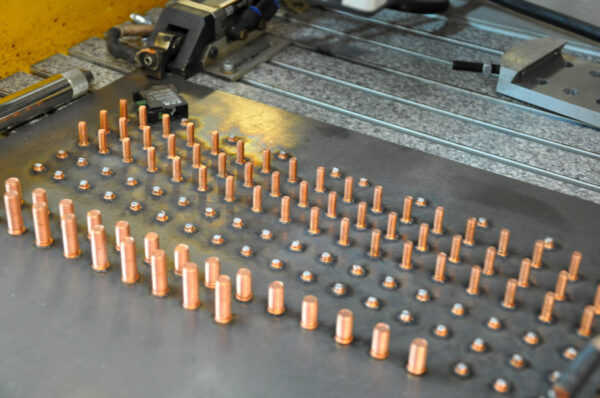
Stud welding is a technique that swiftly and securely attaches metal studs to a base metal, creating a strong bond without the need for drilled holes. This welding method is celebrated for its remarkable speed and versatility, making it a favourite among professionals across a variety of industries.
One of the most striking advantages of stud welding lies in its ability to access hard to reach or highly inaccessible places. Traditional welding methods often struggle with tight corners, awkward angles, or difficult-to-get-to spots. Stud welding, however, can seamlessly install studs in these areas, ensuring a robust connection without compromising the structural integrity of the materials involved.
Applications Across Industries
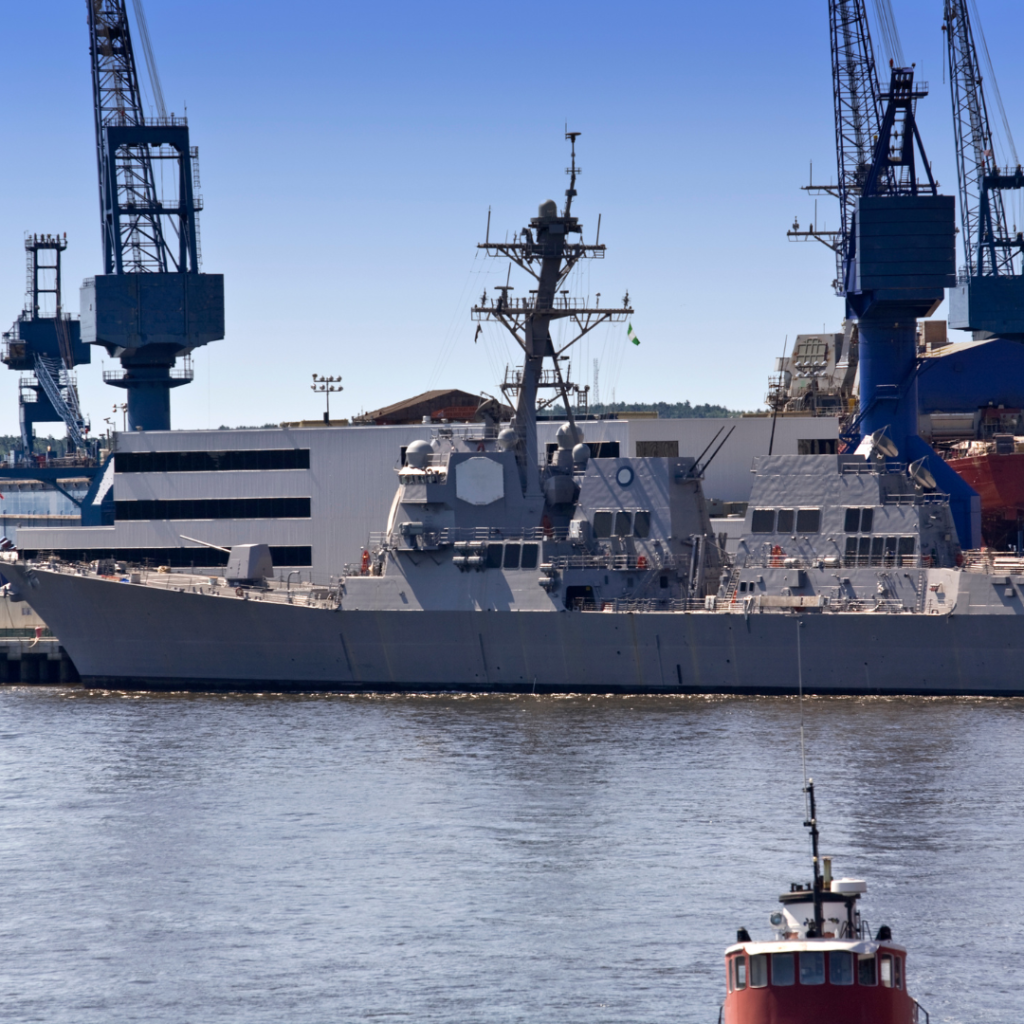
Stud welding systems find applications in a myriad of industries, each reaping the benefits of speed, accuracy, and accessibility. Some examples of industries that frequently use Stud welding as a welding method include:


Using Stud Welding Techniques In Inaccessible Spaces
Stud welding is a versatile and efficient technique that can be used in various inaccessible locations. Here are some specific examples of situations where stud welding might be necessary in hard-to-reach places:
- Aerospace – Undercarriage components. Stud welding is used to attach components to the underside and interiors of vehicles and aircraft, where access might be limited due to the tight space between the chassis and other parts.
- Construction – Corners and edges or intricate designs of steel structures. Stud welding is commonly used to attach steel studs to anchor concrete to metal structures and can access hard-to-reach locations where traditional welding methods may be challenging and time consuming.
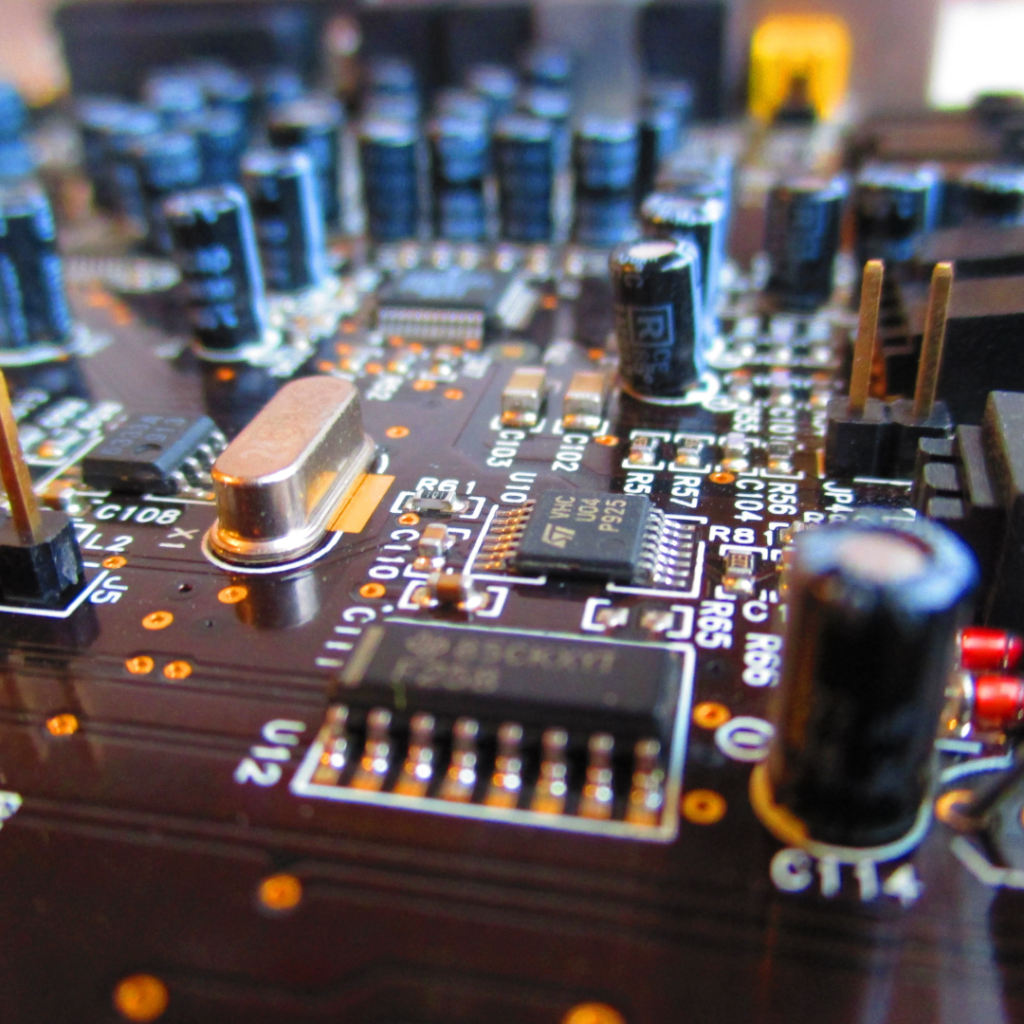
- Electrical – Circuit Boards and Control Panels – Studs are used to mount components and circuit boards which are often located within compact electronic devices. Stud welding is an ideal solution to create precise attachments within a very limited space.
- Plumbing Systems – Pipe hangers and wall brackets – The required location of pipe hangers or brackets which need fixing to steelwork within walls or ceilings can be in very narrow spaces or behind existing pipes or other obstructions. Stud welding allows attachments to be made in these confined areas.
- Oil and Gas Industry – Pipelines. Support brackets and other components that need to be attached to pipelines, including those located underground or in confined spaces can benefit from the use of stud welding as the process allows for access to inaccessible locations.
In all these scenarios, the speed, precision, and ability of stud welding systems to reach inaccessible locations make them invaluable. The technique ensures strong, durable connections in spaces where traditional welding methods would be impractical or time-consuming, demonstrating the versatility and effectiveness of stud welding applications.
Choosing The Right Stud Welding System Based On Project Requirements
It’s important to consider the type of Stud Welding system that will be most appropriate for your specific project. You should consider factors such as, materials, stud size, welding environment, available space, portability and power supply. Stud welding machines come in two primary types: Drawn Arc (DA) and Capacitor Discharge (CD).
Drawn Arc stud welding machines are typically used in heavy-duty industrial applications. They are the machine of choice for welding larger diameter studs and where projects require a high level of penetration. Their highly powerful nature means that they are commonly used where the demand for robust welds is substantial.
Capacitor Discharge stud welding machines are ideal for lighter materials and situations where speed and precision are essential. Their versatility and accessibility means that they are suitable for a wider range of settings including smaller workshops and construction sites.
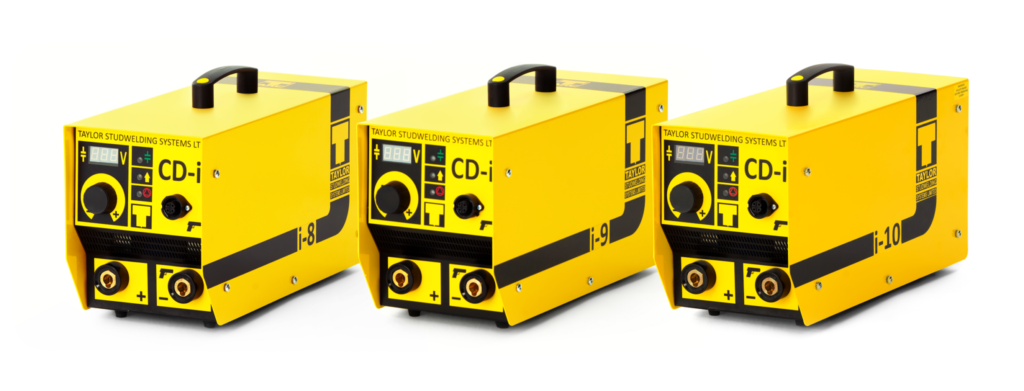
If your project involves a requirement for manoeuvring equipment, consideration should be taken over portability of the stud welding machine. Taylor Studwelding, the UK’s sole designer and manufacturer of Stud Welding equipment, supplies portable Drawn Arc and Capacitor Discharge systems which are compact, lightweight and easy to transport and set up. Their portable systems include the DA i12, DA i16, CD CDM range and CD CDi range.


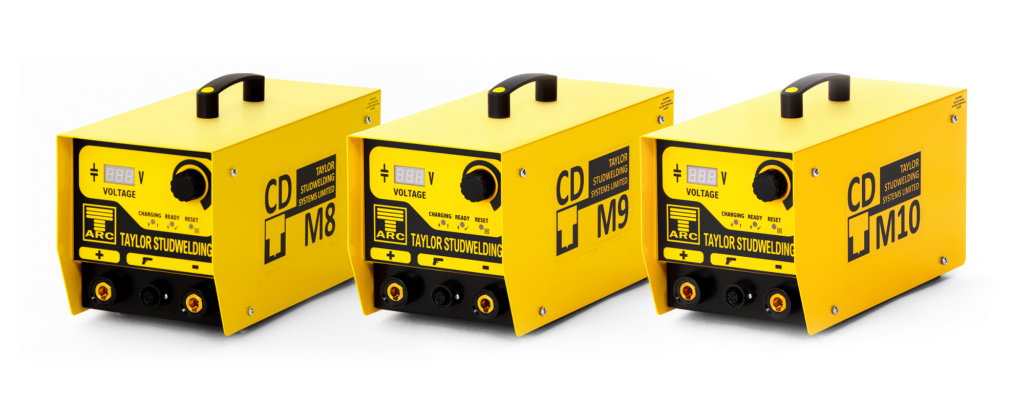
Do all machines require a 3 phase supply?
No, not all stud welding machines require a 3-phase supply. Stud welding machines are available in both single-phase and three-phase versions to accommodate different power supply configurations. The choice between single-phase and three-phase machines depends on the specific requirements of the application and the availability of power supply at the location where the machine will be used.
Drawn Arc machines normally utilise a three-phase power supply. Three-phase systems provide high power capacity, making them suitable for industrial and commercial applications. For Drawn Arc welding, the 3 phase power provides the high welding currents necessary for welding larger diameter studs and more demanding, heavy-duty welding tasks, but single phase machines are available for smaller applications.
Capacitor Discharge stud welding machines, on the other hand, operate on a single-phase power supply. Single-phase systems provide a standard household voltage, such as 120V or 230V, depending on the country and its electrical standards. Single-phase stud welding machines are typically used in smaller applications or locations where only a single-phase power supply is available. They are suitable for light to moderate welding tasks.
It’s essential to check the specifications of the stud welding machine and the power supply available at your location to ensure compatibility and safe operation.
Embracing the Future of Welding
By carefully evaluating these factors and consulting with experts if needed, you can choose a stud welding system that aligns with the specific requirements of your project, ensuring successful outcomes and long-term reliability.
In the fast-paced world of modern engineering, stud welding systems stand as a testament to innovation. By combining speed, accessibility, and precision, these systems have transformed the way we approach metalwork. Whether in the construction of towering skyscrapers or the intricate assembly of electronic devices, stud welding continues to shape our world, one secure connection at a time.
About the Author
With almost two decades of experience, Andrew is a hands-on and dedicated Sales Manager at Taylor Studwelding Systems. Andrew’s expertise covers the entire range of Taylor Studwelding Systems products, including, stud welding machines, weld studs, CNC equipment, and welding equipment available for hire.
 Posted in: Welding
Tags: Metal Work, Sponsored, Stud Welding
Posted in: Welding
Tags: Metal Work, Sponsored, Stud Welding




 Metal sculpture in brass, mounted on an 1800s French Coin